Article Overview and Content
In 2026, amid global supply chain restructuring and tightening compliance regulations, overseas brand buyers should not select plastic injection molding suppliers merely by unit price. Procurement priorities have shifted from simple price comparison to seven core hard metrics: mold engineering capability, dimensional accuracy, material compliance, flexible delivery, IP protection, end-to-end quality control and total landed cost. This guide provides a practical supplier evaluation framework for buyers in consumer electronics, smart home, small home appliances and automotive accessory industrie
## 1. Mold Engineering Capability: Core Threshold for Complex Components
For undercut parts and curved cosmetic housings, mold design directly determines mass production yield. Key points to verify:
1. Experience with sophisticated mold structures: tunnel sliders, angle lifters and multi-core pulling for complex undercut features, such as cylindrical shells and positioning jigs.
2. Parting line control: High-grade cosmetic parts require parting line within 0.02 mm for invisible seamless finish without obvious steps or flash.
3. DFM (Design for Manufacturability) review: Suppliers should optimize part structure before mold cutting, predict risks of shrinkage, warpage and weld lines, and reduce costly mold revisions later.
4. Mold steel selection, CNC machining precision, expected mold lifespan and written clauses of mold ownership.
>
> Pitfall Warning: Low mold quotations often skip DFM analysis. Repeated mold modifications will lead to much higher overall costs.
## 2. Engineering Plastic Selection & Material Compliance
Material selection determines mechanical strength, temperature resistance and surface finish. Materials must comply with regional regulations:
1. Common engineering plastics: PC, PC+ABS, modified nylon, PP, TPE. Request official COA material certificates.
2. Compliance certification: REACH & RoHS for EU shipments; FDA requirements for North America. Food-contact products need additional food-grade test reports.
3. Batch consistency: Raw material traceability to guarantee stable color and shrinkage rate across different batches, preventing mass defects.
## 3. Dimensional Tolerance & Cosmetic Standard
Define tolerance and defect classification in RFQ stage, adopt AQL sampling standard:
1. Precision cosmetic parts: ±0.05~±0.1 mm for critical assembly dimensions; ±0.1~±0.3 mm for standard structural parts.
2. Cosmetic specification: Clarify acceptable limits for parting lines, ejector marks, sink marks, scratches and bubbles. Transparent parts and matte housings require stricter surface control.
3. Inspection equipment: Check if supplier owns 2D / 3D measuring machines and can provide FAI first article inspection reports.
## 4. Quality Control System: IQC‑IPQC‑FQC Closed-loop Inspection
Qualified export-oriented injection molders must build three-stage QC workflow:
- IQC Incoming Quality Control: Raw material inspection upon arrival.
- IPQC In-process Quality Control: Periodic dimension & appearance sampling during molding.
- FQC Final Quality Control: Pre-shipment inspection with photo archive.
Suppliers with ISO9001 certification are preferred.
## 5. Flexible Delivery: Prototyping, Pilot Run & Mass Production
Global brands accelerate new product iteration in 2026. Buyers need vendors supporting flexible order volume:
1. Fast prototyping and T1 mold trial turnaround time.
2. Support small pilot runs (thousand pieces) for market validation before mass production.
3. Clear lead time commitment and delay compensation terms, verify production capacity during peak seasons.
## 6. Intellectual Property & NDA Protection
CAD drawings and product appearance are core assets. Confirm before placing orders:
1. Sign bilingual NDA non-disclosure agreement to protect drawings and samples.
2. Define mold ownership, storage, modification and transfer terms in contract.
3. Prohibit supplier from using your original design for other client case promotion.
## 7. Total Landed Cost Calculation (Beyond Unit Price)
Never evaluate suppliers only by unit price. Calculate total landed cost:
Total Landed Cost = Tooling cost + unit part price + mold revision risk + inspection + packaging + logistics + tariff + defective product loss.
Suppliers with ultra-low quotation usually come with high reject rate and frequent mold changes, resulting in higher overall expenditure.
## Recommended Procurement Workflow
1. Submit full 2D drawings, 3D CAD, material grade, tolerance and cosmetic requirement for RFQ.
2. Evaluate DFM proposal, test samples and verify material certificates.
3. Confirm FAI first article report and conduct small batch pilot production.
4. Lock AQL standard, lead time, NDA and mold ownership before mass production.
## About Dongguan Ruibo Plastic Co., Ltd.
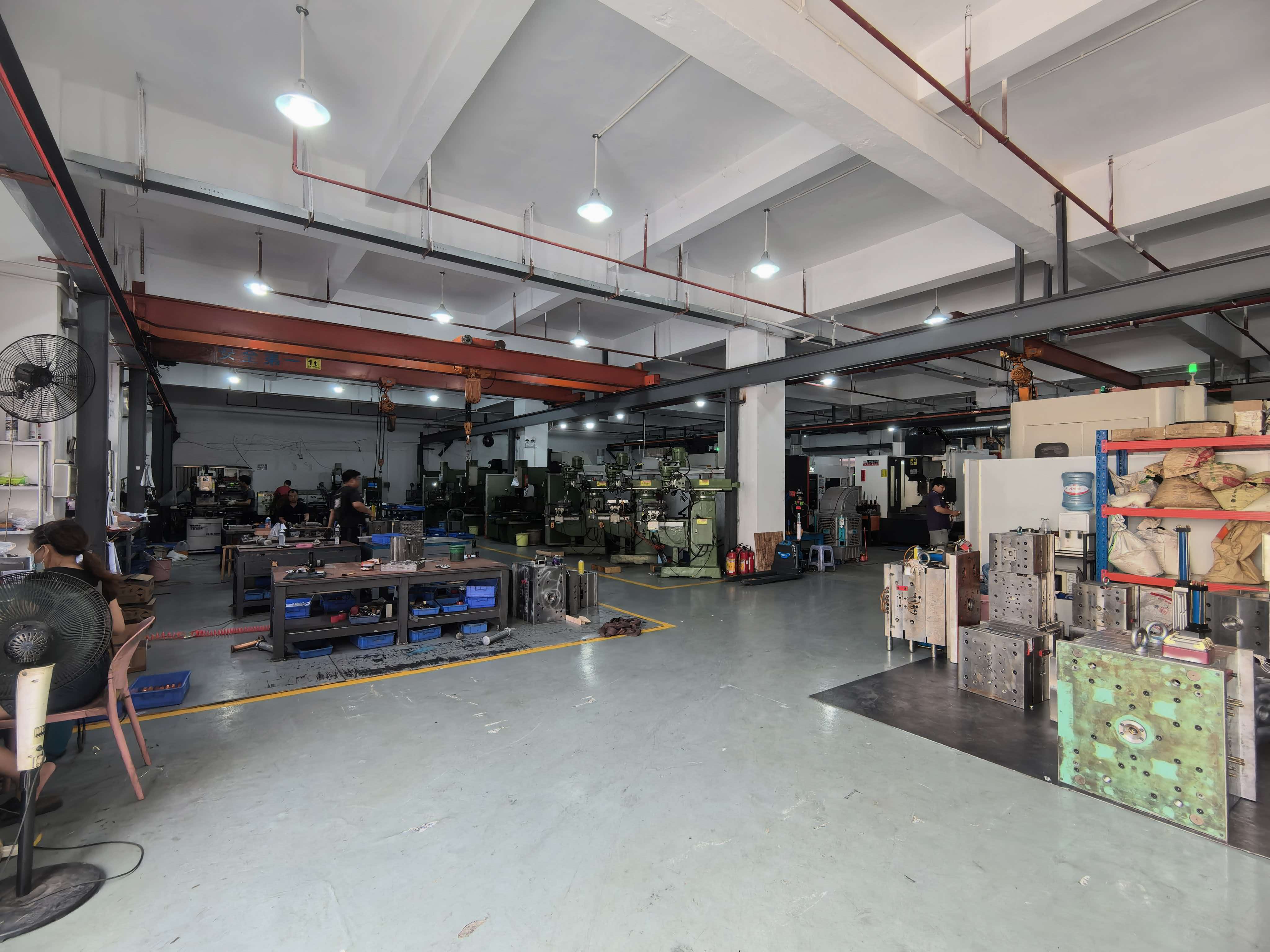
Dongguan Ruibo Plastic specializes in precision mold development and engineering plastic injection molding. We excel in tunnel slider molds, low invisible parting line cosmetic parts, transparent plastic components and OEM & ODM customization for PC+ABS housings. We deliver one-stop services including DFM review, mold fabrication, mold trial and injection production for global smart home and consumer electronics clients. We support rapid sampling, small pilot runs and mass manufacturing. Our products meet RoHS and REACH export requirements. Global customers are welcome to send drawings or samples for evaluation and quotation.